
Trent Carter
True Synthesis Inc · Builder of Verdict
30+ years across semiconductors, wireless, mobile, aerospace, and cloud — now spent building the multi-agent AI platform I wished existed when I was wiring LLMs into production systems.
Why I started True Synthesis
I've spent my career on the unglamorous side of complex systems. NCR/AT&T early on. A decade of semiconductor and 802.11 work at Conexant and Harris. WiMAX at Sequans. 48+ shipped iPhone apps and a VP role at BahnTech. A second VP run at iBox. Avionics certification at Thales. Most recently as Lead Cloud Architect and AI Integration Lead at L3Harris — migrating satellite ground systems to AWS GovCloud and standing up an agentic framework for L1-L4 requirements traceability.
There are few greenfield systems — mostly hybrids. Hardware meets software, on-prem meets cloud, and requirements-driven, heavily structured work usually beats the fast path. My job has always been the same: make the heterogeneous behave like the homogeneous by collapsing complex systems into their natural balance using first-principles thinking.
When LLMs went from research toy to load-bearing infrastructure, I kept seeing the same anti-pattern: pick one provider, pick one model, hardcode it everywhere, hope it doesn't change under you. That isn't how the rest of the stack is built and it isn't how this layer should be built either. So I founded True Synthesis Inc to build it properly.
What Verdict is
Verdict is a multi-agent AI orchestration platform — an IDE and a runtime — that routes work across the model that's actually best for each step. Not the model in your default config. Not the model your last tutorial used. The one that wins on this task, at this latency, at this price.
Routed, not monolithic
Tasks are decomposed and routed across local, LAN, and cloud models. The right model for the rung — not the most expensive model for everything.
Escalation ladders
When a smaller model is sufficient, it stays. When the work needs more, the system escalates with structured handoff and shared context — not a fresh prompt.
Cost-aware fallbacks
Provider failures, rate limits, and timeouts are first-class. Fallbacks are routed by capability and price, not by whichever provider was hardcoded first.
Shared Agentic Memory (SAM)
A persistent, structured memory layer that lets agents hand off briefs, decisions, and ladder state — so the next agent doesn't start from zero.
Benchmarked across providers
Every model and routing path is measured against real tasks (coding, reasoning, math) and stored as evidence. Routing decisions are driven by data, not vibes.
Local-first, cloud-optional
Run entirely on a workstation, extend to LAN GPUs, or burst to cloud providers. The user owns the topology.
Why this background actually matters
Multi-agent orchestration looks like an AI problem from the outside. From the inside it's mostly the boring problems I've been solving for thirty years: routing, fallback, timeouts, backpressure, capability bands, certification-grade observability, and a healthy respect for what happens when one component in a pipeline lies to the next one.
Aerospace teaches you that "it worked once" isn't an answer. Cloud architecture teaches you that bills compound. Avionics teaches you that traceability isn't a deliverable, it's the point. Mobile teaches you that the user notices 100ms. Verdict inherits all of that.
For the full chronological record see the about page and resume. This page is the founder version of why I'm doing it.
About TrueSynthesis Inc
TrueSynthesis Inc (Austin, TX) serves as the parent corporation and developer API gateway unifying our multi-agent orchestration, inference optimization, and digital provenance technologies. Corporate overhead is centralized, while specialized operations run across dedicated DBAs.
The name reflects the core thesis: true intelligence in software emerges from synthesis — combining specialized, bounded capabilities across heterogeneous model tiers, continuous vector manifolds, and cryptographic verification rather than leaning on a single generalist model.
Ventures & Architecture Suite
Live platforms, developer IDEs, inference routers, and cryptographic provenance engines across the TrueSynthesis ecosystem.
TrueSynthesis Inc
Austin-based corporate parent and central developer API gateway unifying multi-agent orchestration, model routing ladders, and cryptographic synthetic media verification infrastructure.
Verdict / VerdictIDE
5-tier hierarchical multi-agent orchestration platform and developer IDE. Investigates codebases, solves bugs, verifies fixes with test evidence, and maintains persistent Shared Agentic Memory (SAM).
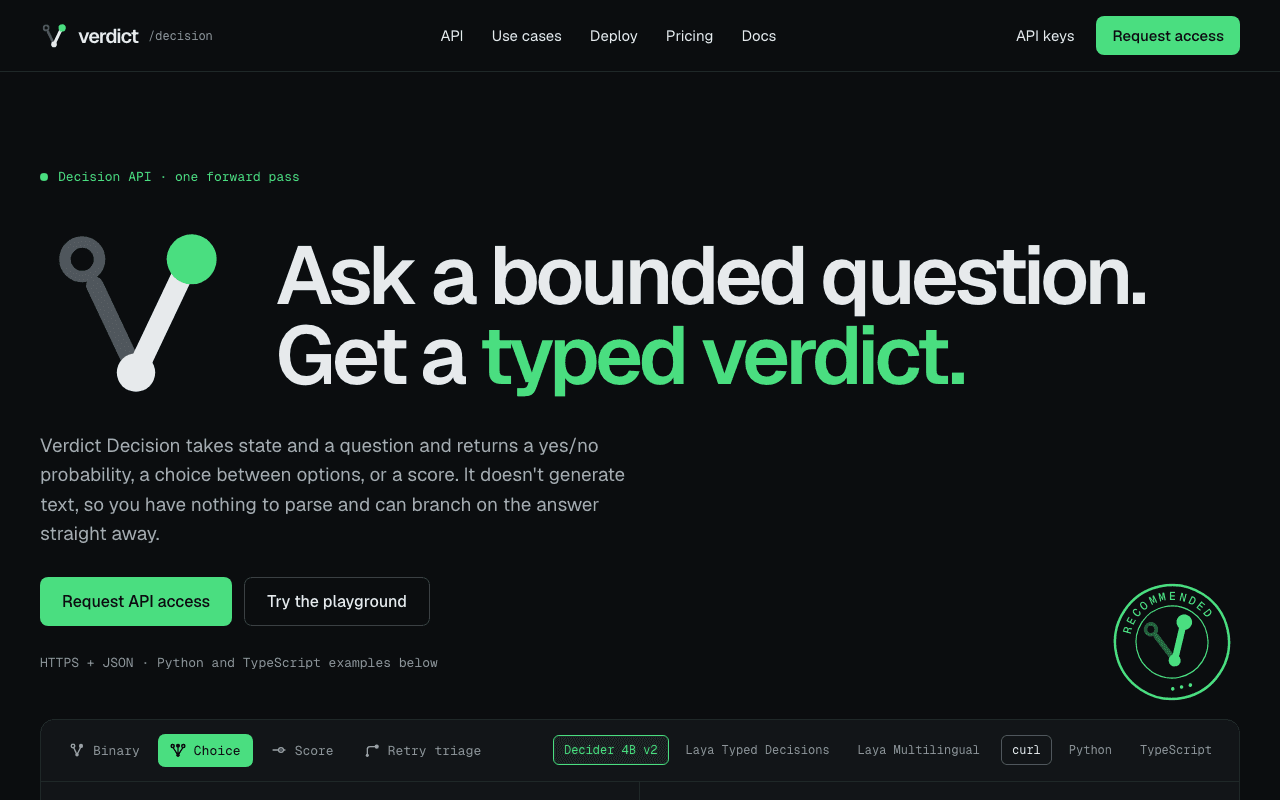
VerdictDecision
Autonomous consensus, decision-tree arbitration, and governance engine for multi-agent workflows. Evaluates competing agent proposals and enforces formal consensus logic.
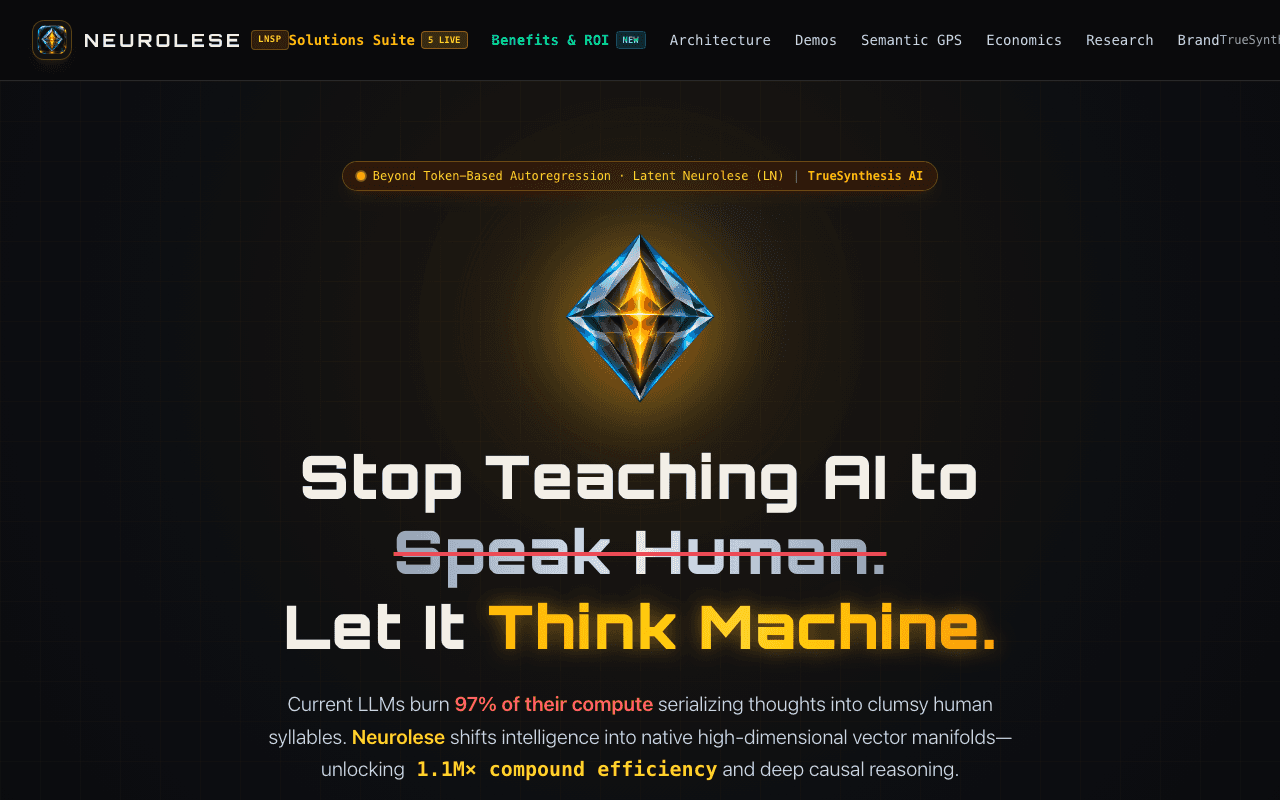
Latent Neurolese (LNSP)
Bypasses the serialized tokenization bottleneck for native high-dimensional vector reasoning (Latent Vector Models). Operates on continuous 784D semantic manifolds with 1.1M× compound compute efficiency.
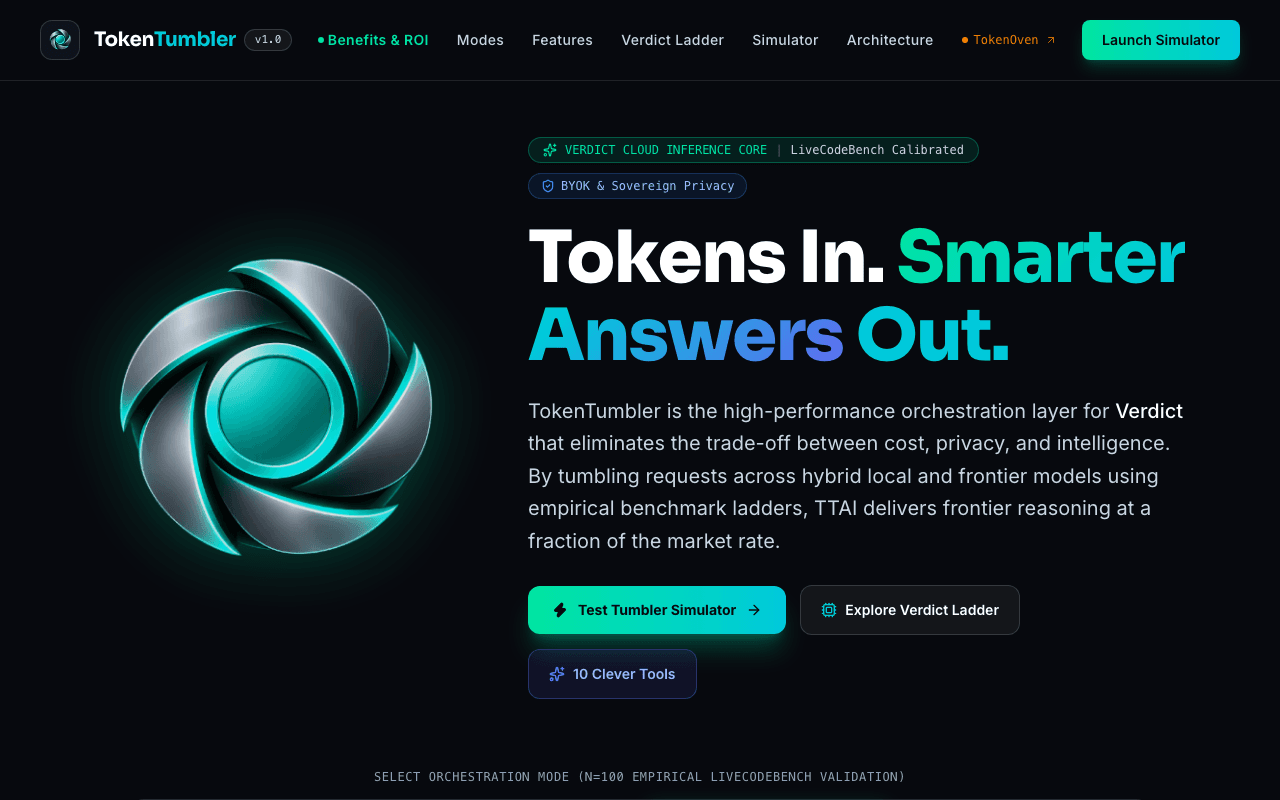
TokenTumbler
High-performance inference broker and hybrid router across local, LAN, and cloud LLMs. Delivers frontier-level intelligence at benchmark-optimized rates with zero-knowledge sovereign privacy (BYOK).
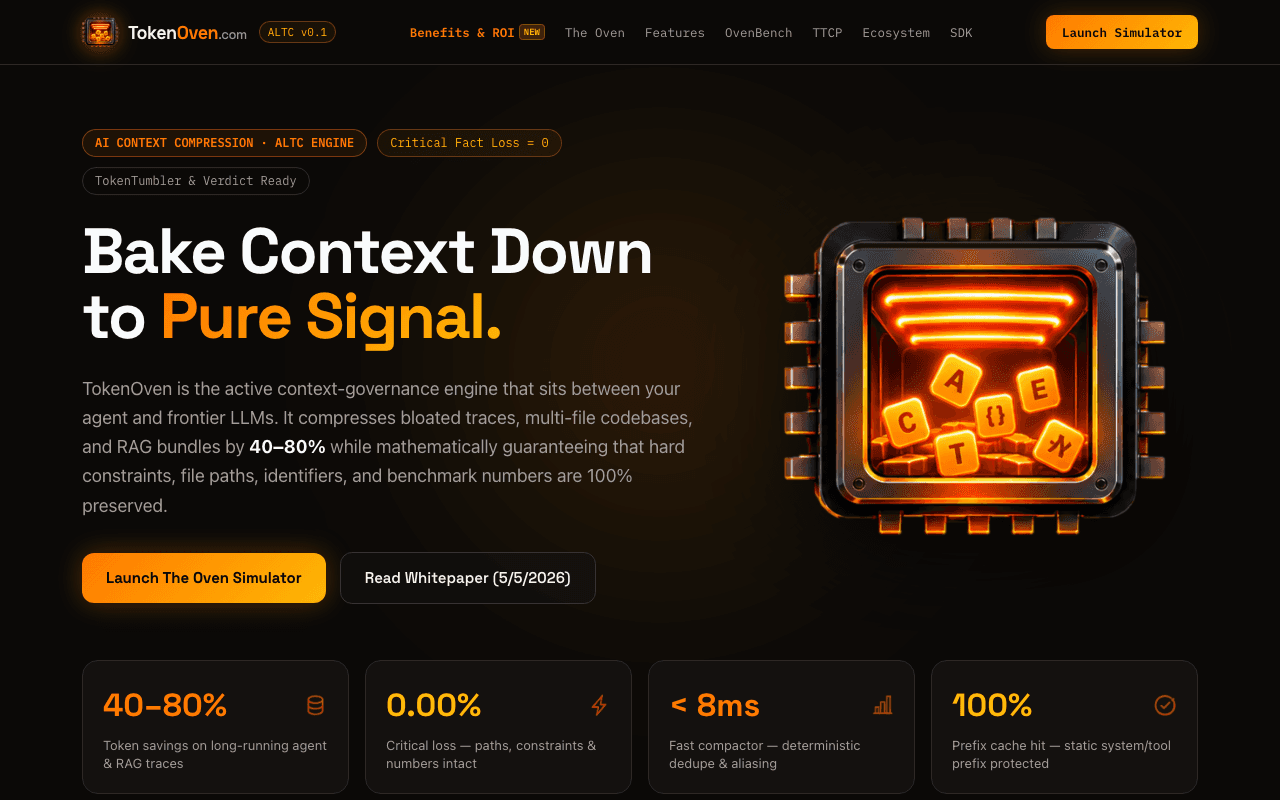
TokenOven
Active context-governance engine that sits between agents and frontier LLMs. Compresses bloated traces, multi-file codebases, and RAG bundles by 40–80% with 0.00% critical fact loss and <8ms compaction.
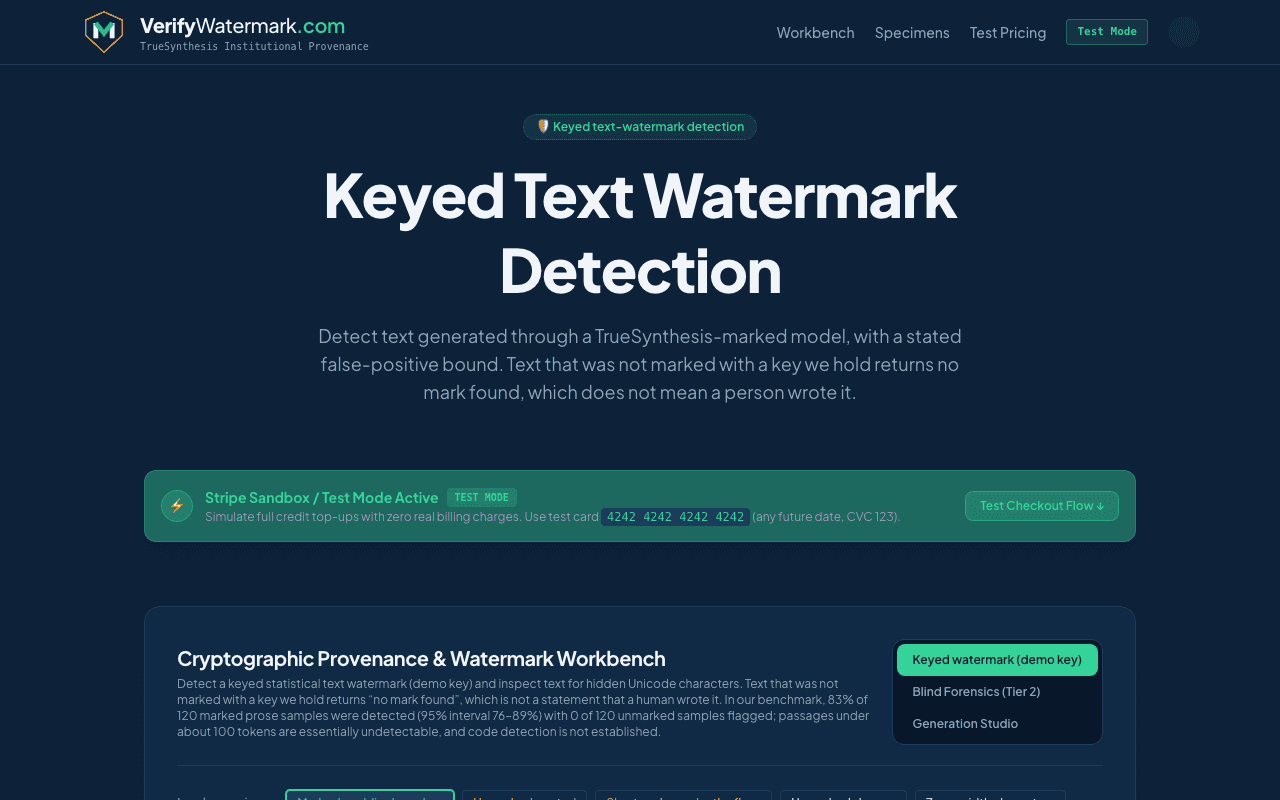
VerifyWatermark
Enterprise synthetic media provenance and invisible watermarking verification engine. Certifies synthetic AI content origin, metadata integrity, and C2PA cryptographic compliance across images, video, and audio.
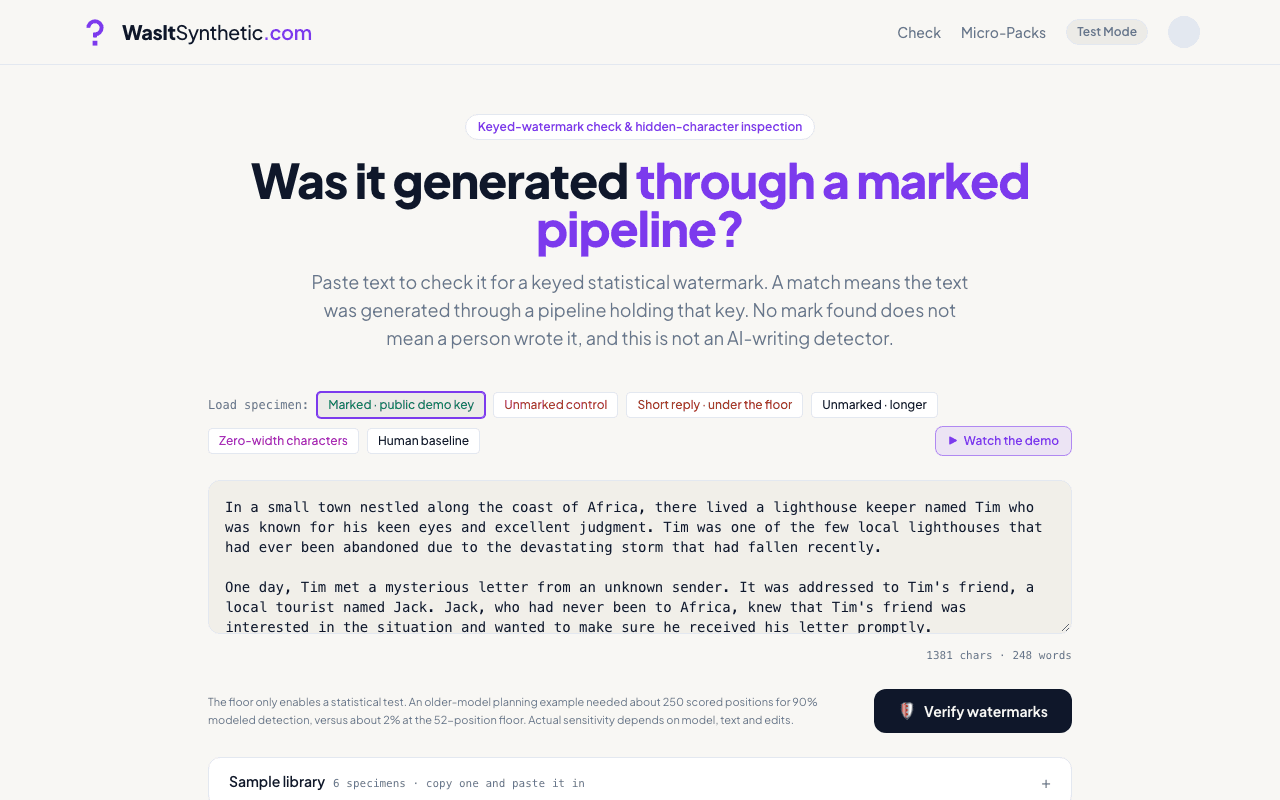
WasItSynthetic
Instant consumer and public verification portal answering 'Was it synthetic?'. Inspects keyed statistical watermarks, zero-width steganography, and hidden characters with mathematical bounds.
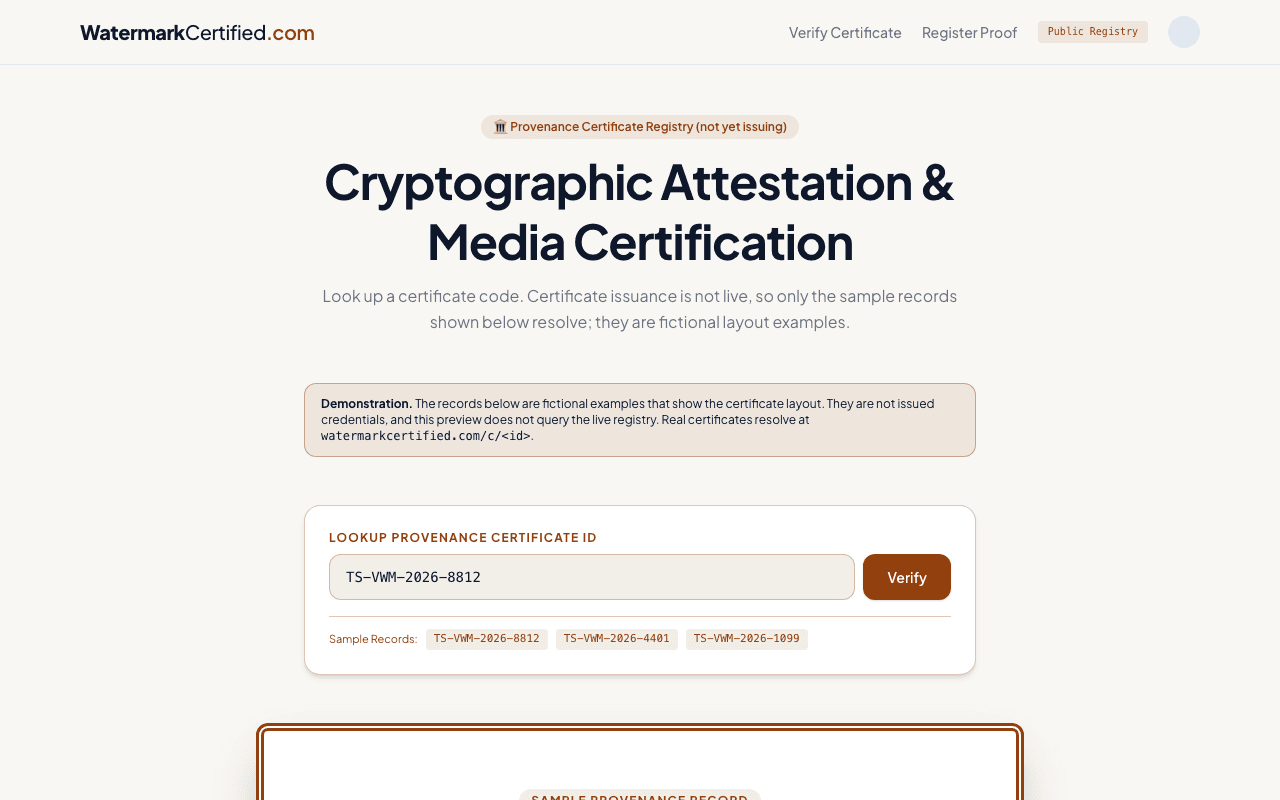
WatermarkCertified
Official attestation authority and public provenance certificate registry. Issues cryptographically signed credentials and lookup codes certifying media generation provenance.
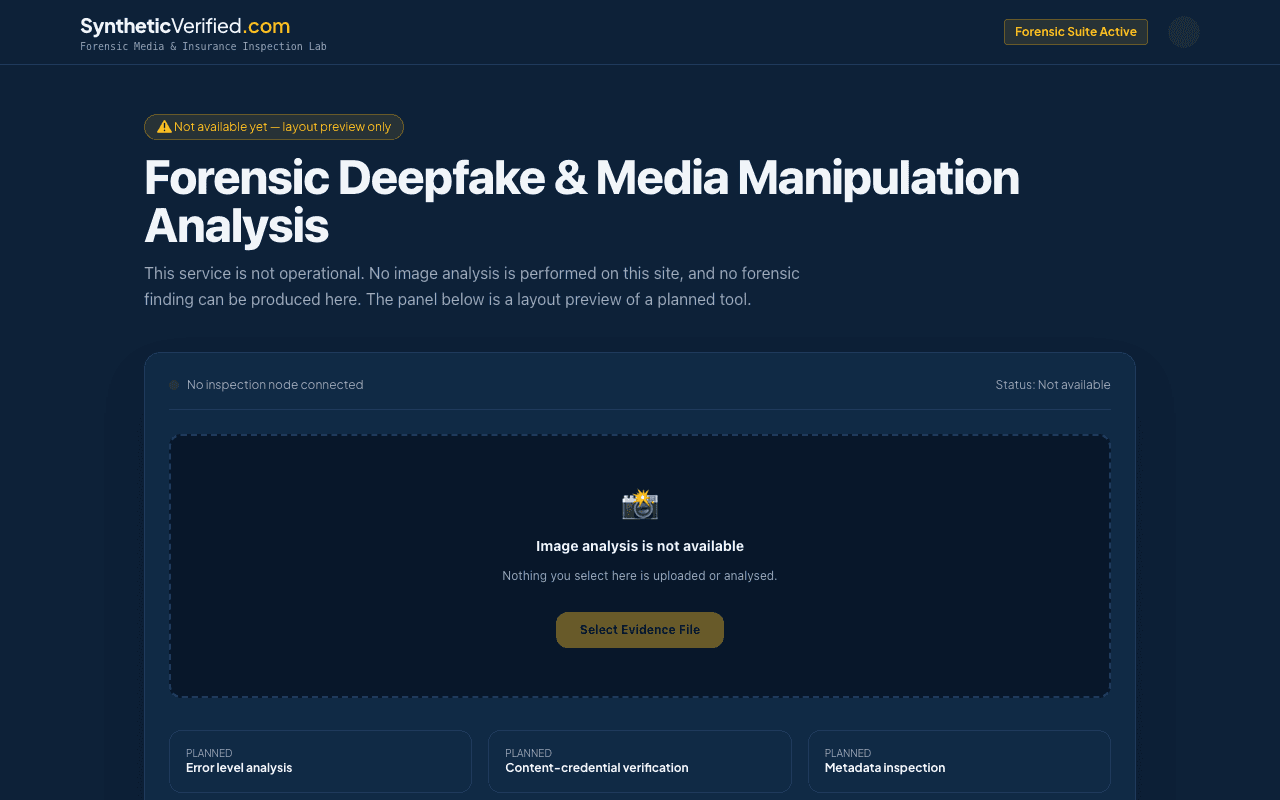
SyntheticVerified
Verification portal built for AI generation platforms to certify their output pipelines, model lineage, and enterprise compliance badges before content distribution.
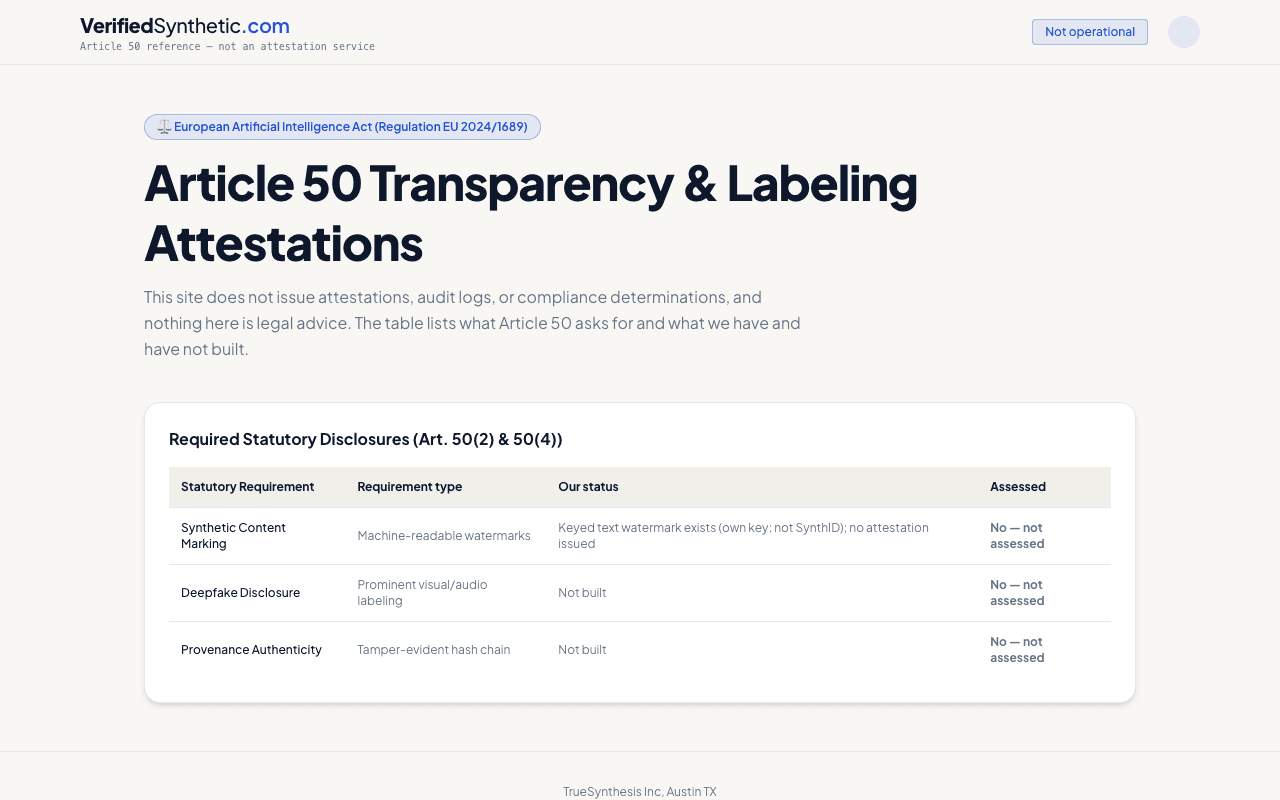
VerifiedSynthetic
Audit logging, compliance assurance, and verification badging system ensuring complete transparency and regulatory alignment for commercial generative AI applications.
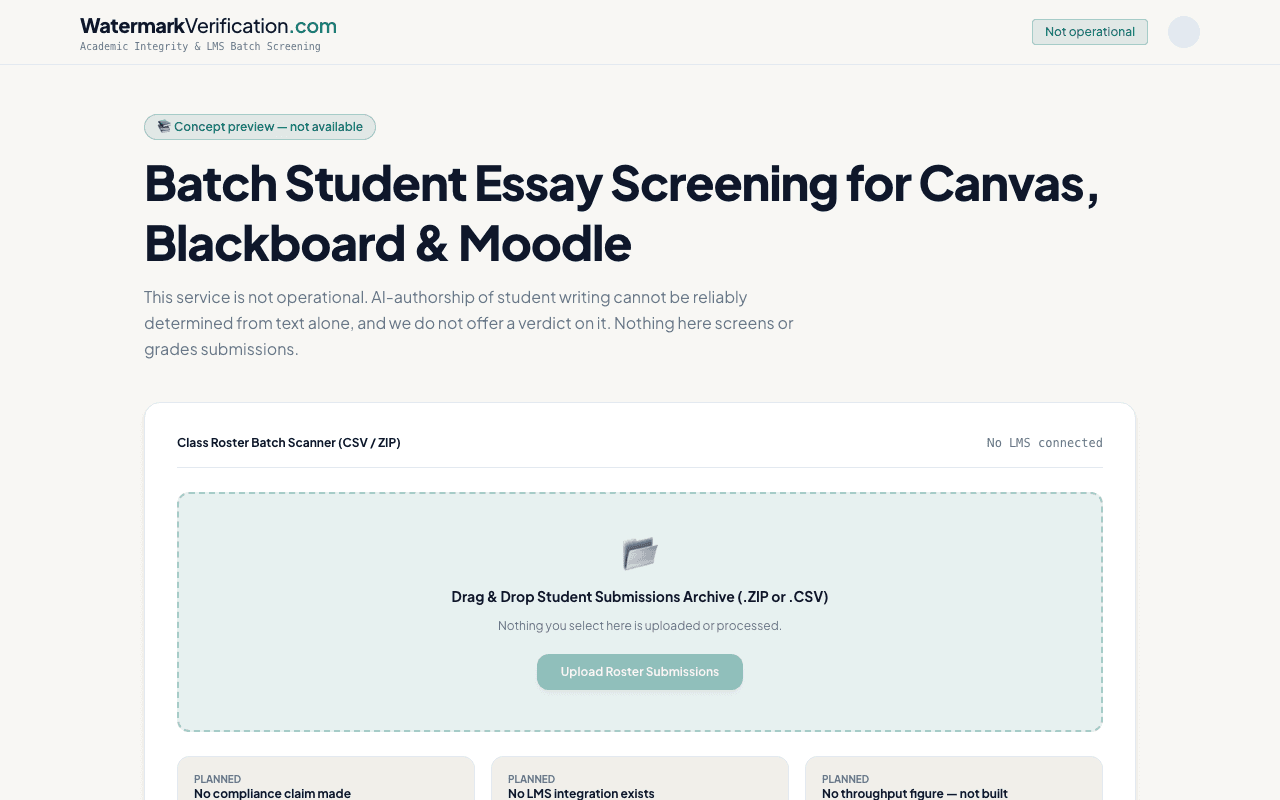
WatermarkVerification
High-throughput programmatic API suite designed for enterprise CDN pipelines, media distributors, and platforms requiring automated, millisecond-grade watermark verification.
CertifiedWatermark
Origin verification widget and embeddable trust seal for digital publishers and creators, giving readers one-click cryptographic confirmation of media authenticity.
Corpus Aegis
Sovereign data fortification and contextual defense boundary for multi-agent knowledge bases. Protects against prompt injection, memory poisoning, and unauthorized context exfiltration.
Ambient
Always-on ambient intelligence runtime providing continuous situational awareness, passive perception, and autonomous proactive coordination across local environments.
Why routed multi-agent beats single-model-everything
The single-model-for-everything pitch is convenient for vendors and expensive for users. It assumes the frontier model is best at every sub-task, that latency doesn't matter, that price is somebody else's problem, and that one provider will never go down, deprecate a model, or change pricing.
None of those assumptions hold in production. They especially don't hold for serious work — coding, research, agentic workflows — where a single bad rung can poison the whole chain.
Routed multi-agent systems handle this the way the rest of engineering handles heterogeneity: with measurement, fallback, and an honest cost model. That's the bet Verdict is built on, and after benchmarking it across a long list of providers, models, and tasks, I'm more convinced of it now than I was when I started.